Fireside Trust Performance and Ethics in Action

Logan Chrisinske • October 30, 2025

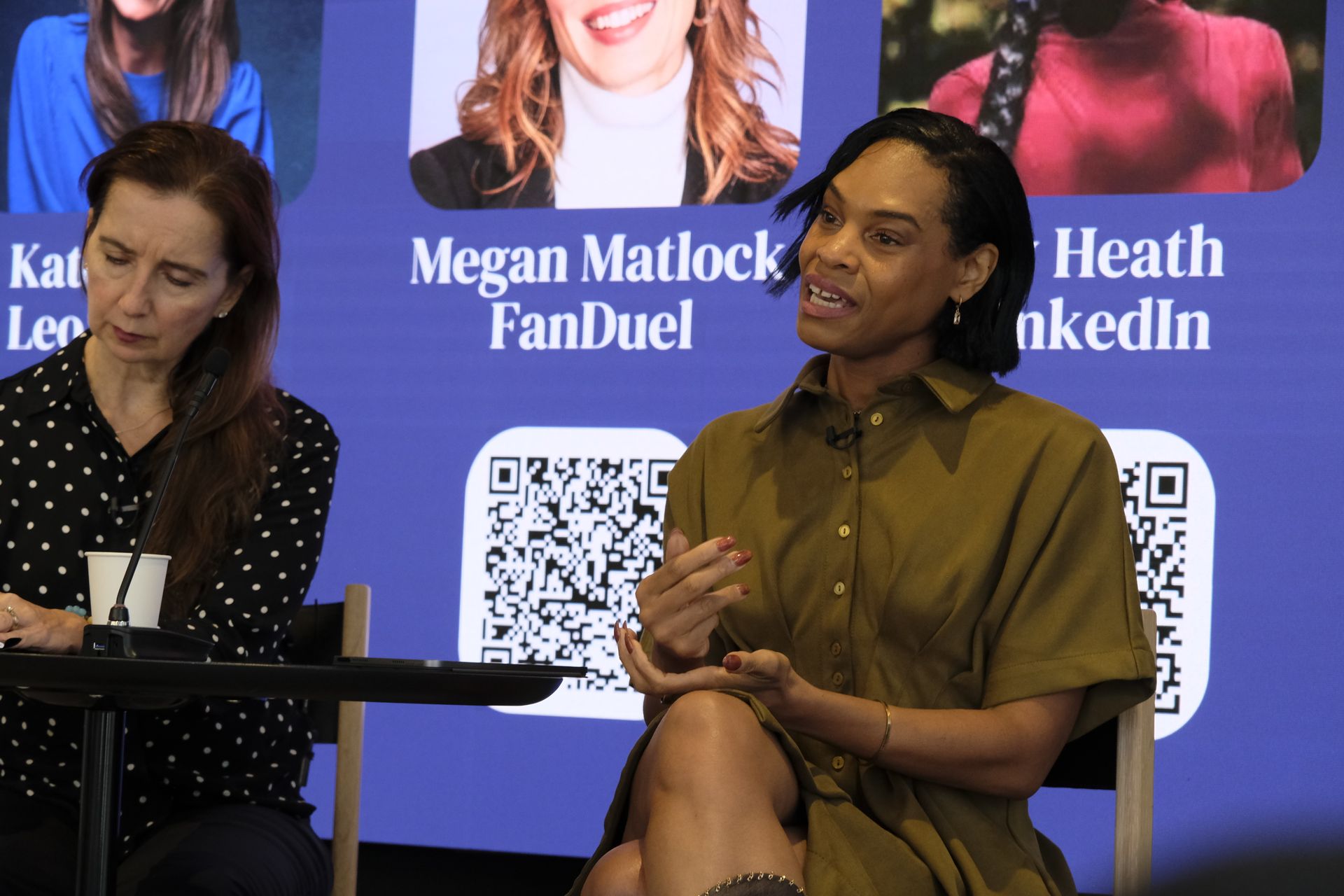
At the Global Ethics Day session hosted by the Institute for Advertising Ethics, Ty Heath, director and co-founder of the B2B Institute at LinkedIn, and Senny Boone, senior vice president at the Association of National Advertisers, explored how ethics serve as a foundation for trust and long-term business success in both consumer and B2B marketing.


The discussion, was moderated by ID Comms CEO Tom Denford, underscored that ethical practices aren’t just moral ideals—they’re strategic investments in trust that define the future of marketing.


Heath compared ethics to architectural integrity, calling them “the foundational investment in the integrity of yourself and the institution you’re building.” She emphasized that companies with strong ethical principles build faster, smoother, and more sustainable relationships with clients. “The brand that’s remembered is the brand that’s bought,” she said, underscoring that reputation and trust directly influence business decisions.

Boone echoed that ethical consistency is crucial to consumer confidence, especially in a world shaped by AI and digital marketing. “Consumers are incredibly skeptical and want brands to demonstrate what their ethics mean through transparency and accountability,” she said.


Both panelists stressed the importance of honesty, cultural integrity, and education in guiding future marketers. Heath urged leaders to “give more value than you extract,” while Boone encouraged students to strengthen their “moral compass” through studying ethics, philosophy and humanities.

Watch Full Session Here

Share

By Logan Chrisinske November 20, 2025
Building Trust at Every Touchpoint The Institute for Advertising Ethics is gaining momentum, propelled by the success of our October Global Ethics Day in New York. Across participants and panelists alike, IAE’s Ethics Day affirmed a growing consensus that trust is now becoming operational, measurable, teachable, and scalable throughout the advertising and media ecosystem. Global Ethics Day 2025: Building Trust at Every Touchpoint The Liberty Room at Frankfurt Kurnit was filled on October 15 as leaders from industry, government, civil society and academia united for IAE Ethics Day 2025. Delegates from the U.S. Government, ANA Ethics Center, Microsoft, Kenvue, Uber, LinkedIn, Google LLC, Yahoo Inc., Accenture, Dentsu, Paul Weiss, Mastercard, and many others came together around a single, urgent theme: advancing the creation of scalable ethics standards to restore trust across the $1.5 trillion advertising and media industry, especially amid the rise of AI. The work is well underway, led by leaders shaping an open, validated, multi-stakeholder standard, one that delivers transparency, interoperability, verifiability, and broad adoption. Highlights included: “The future of advertising depends not only on innovation but on trust. Ethics shouldn't be understood as a constraint on innovation, rather as a catalyst for it." -Dr. Juan Mundel, Editor, Journal of Advertising Education. Dr. Juan Mundel speaks about rebuilding trust in Advertisin g “We need to create a culture where people can ask questions and where we prioritize ethics.” -Dr. Anna McAlister, Director of Curriculum and Assessment, IAE Experts highlight the role of ethics education and self-regulation in the Advertising Industry “Trust is the new currency in our industry. Without it, even the most creative campaigns can’t sustain real impact.” -Ty Heath, Director and co-founder of the B2B Institute, LinkedIn Fireside Trust Performance and Ethics in Action “People tend to believe computers are smarter than we are, which makes us less likely to question their output.” -Dr. Dana LaFon, U.S. Government Panel Explores Global Ethical Frameworks Guiding AI and Advertising “AI knows, but AI doesn’t think and AI doesn’t feel. That’s a line that’s helpful for me.” -Esther Uhalte Cisneros, Head of eCommerce & Retail Sales, Germany, Google Experts Debate “Where to Draw the Line” in Advertising Ethics, AI and Authenticity “Legal is [...] the floor and ethics is the ceiling. Even if something is legally correct, it may not be ethically right to do.” -Peri Fluger, General Counsel, Ruder Finn Building a Culture of Compliance: From Policy to Practice
By Logan Chrisinske November 3, 2025
At the Global Ethics Day session hosted by the Institute for Advertising Ethics, legal and communications leaders from Uber, LinkedIn and Ruder Finn joined attorney Jeffrey Greenbaum of Frankfurt Kurnit Klein & Selz to discuss how companies can translate ethical principles into practice. Greenbaum opened by noting that ethical advertising often goes beyond legal compliance. “Even if you communicate truthful information to consumers, but you communicate it in a way that’s misleading, that in and of itself can be false advertising,” he said. Jess Smith, associate general counsel at Uber, said ethics should be embedded in company culture, not just policy. “It’s not just who the brand is — it’s what actions they take out in the world,” she said.
By Logan Chrisinske October 31, 2025
At the Global Ethics Day session hosted by the Institute for Advertising Ethics, panelists explored how ethical frameworks—Western and non-Western alike—shape the future of artificial intelligence and advertising. John C. Havens, a leading AI ethics expert and author, opened the discussion by contrasting Western “dualism” with indigenous and collective ethical traditions. “In the West, binary code—1 and 0—is based on dualism,” he said. “But traditions like Ubuntu ethics remind us, ‘I am because we are.’ When you take the best of Western thinking and apply what it means to be in community, you get the best of both worlds.” Alayna Kennedy, a data scientist and AI governance leader at MasterCard, emphasized the importance of turning abstract ethics into practical systems. “The real challenge is how to make fairness real—how to take a word on a page and turn it into a change in your product that impacts a real person,” she said. She added that MasterCard takes a “risk-based” approach to AI governance, focusing on identifying and mitigating potential harms while enabling innovation.